Expert interview

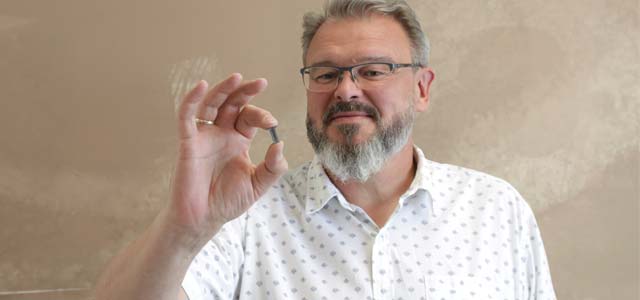
Expert interview with Thomas Kamrad, Head of Project and Application Engineering at HONSEL

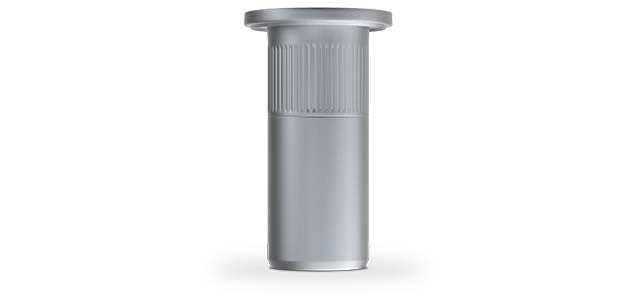
Another Milestone in HONSEL fastening technology: The self-sealing blind rivet nut HONSEL crimpSEAL

Reliable Sealing Without Additional Sealant - Sealed. Secure. Efficient.

How long have you been working in fastening technology in the automotive sector?

I have been working in the design and development of innovative fastening elements and automation solutions for the automotive industry for over 30 years, working closely with engineers at major OEMs and their suppliers. For the past 8 years, the focus has been on creating technically reliable, efficient and sustainable fastening elements.

What is the significance of fasteners in the automotive industry today, including with regard to e-mobility?

Fastening elements are found in almost every area of vehicle engineering - whether securing airbag frames in the dashboard area or window regulator mechanisms with blind rivets, using blind rivet nuts as threaded fixing points for instrument panels, or attaching boot lid bump stops with blind rivet studs.

Fastening elements are therefore indispensable in vehicle engineering. However, applications are becoming increasingly complex and cost pressure grows year by year.

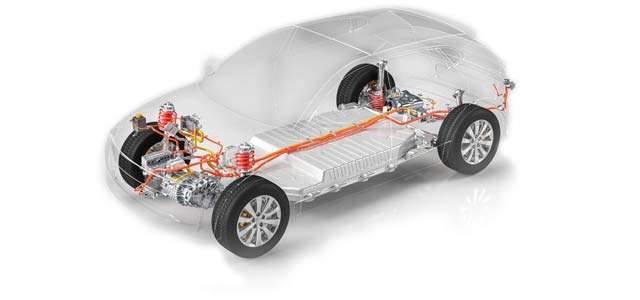
With regard to e-mobility, the sealing requirements for blind rivet nuts and blind rivet studs have evolved enormously in recent years. Battery housings must be protected against moisture ingress by every available means. Closed blind rivet nuts with various sealing solutions are increasingly gaining market share for these applications.

Where do existing solutions reach their limits today?

The current issue of PFAS-free products also affects fastening elements. The seals of the blind rivet nuts and blind rivet studs mentioned above must be tested for PFAS compliance where required.

Since a large number of applications are also processed fully automatically, vibratory bowl feeders are used, for example. Here there is a fundamental risk that a sealing ring may shift on the shank of the blind rivet nut, or in the worst case detach completely.

That was also the origin of the idea for our latest development, the crimpSEAL blind rivet nut - a self-sealing blind rivet nut without additional sealant.

What exactly are the advantages of this new fastening solution?

In the installed position, the crimpSEAL seals from above on the component surface and within the bore. It ensures reliable sealing - entirely without additional sealant. Neither sealing rings nor injection moulding are required.

Ageing of a sealing material is not a concern, and it is PFAS-free - making it completely safe to use. With no sealing material present, temperature-related issues at this point are also eliminated.

Which OEM requirements were the primary focus?

As already mentioned, testing requirements are becoming ever more extensive and automation ever more comprehensive.

The elimination of the sealing material has an enormously positive impact here, as only the blind rivet nut material and surface finish need to be considered.

Optimising automation capability is a key focus. In addition to sealing performance, a round shank and a lead-in chamfer have been incorporated. Alignment of flat surfaces - as required with a hexagonal blind rivet nut - relative to the bore or punched hole is therefore not necessary.

How exactly does the sealing mechanism work?

The sealing effect is created by a circumferential chamfer that presses into the bore during the setting process, as well as by a sealing ring beneath the head, which either presses into the component material or deforms against the surface to create a seal, depending on the component material.

Sealing performance is tested and guaranteed in accordance with HONSEL standard TL 6.0.01.0. A typical market standard leakage rate to IPX 7 is 0.6 cm3/min. The HONSEL crimpSEAL achieves 0.04 cm3/min (e.g. steel).

We also carry out tests on original customer components.

How did the development process unfold - from idea to market readiness?

After taking up the topic as a project and theoretically evaluating initial ideas, a simple prototype production run was carried out. This already confirmed the correct approach. Subsequently, extensive feasibility assessments were conducted to verify process-reliable and economical production. The current product portfolio covers M5, M6 and M8.

What hurdles had to be overcome along the way?

It is pleasing to say that there were no significant hurdles. The idea came about quite quickly, and our management approved the necessary resources just as swiftly - not only for development and production, but also for additional in-house leak testing equipment.

Our tooling specialists were able to assess the required innovations positively and implement them in the pressing tool without difficulty. Setting up the press required a degree of precision and sensitivity, but was never a real obstacle at any point.

What advantages arise in manufacturing and quality assurance?

By eliminating the process of fitting a sealing ring or injection moulding a seal, lead times are reduced and delivery times to customers are optimised accordingly.

From a quality assurance perspective, the process of fitting or moulding a seal no longer needs to be assessed for each individual part, and the characteristic is also no longer required in the final 100% inspection on the sorting machine.

In general, it can be said that the previously required elevated inspection scopes are reduced.

How do you see the future of fastening technology in the automotive sector?

Fastening elements are indispensable in the automotive sector. However, we will need to adapt to, among other things, even shorter development timescales and more complex applications.

As e-mobility continues to expand, some product areas that have been taken for granted for decades are shrinking or may disappear entirely. However, new applications and the increased sealing requirements mentioned are bringing new products to the fore.

It must also be taken into account that OEMs are increasingly having their assemblies produced by large Asian tier suppliers in Europe, who naturally tend to focus on their existing suppliers. As European suppliers, we need to establish ourselves there and win business through innovation, optimised development timescales and outstanding quality.

It remains an exciting time.

Cookies

We use cookies to enable you to make the best possible use of our website and to improve our communication with you. We take your preferences into account and process data for analytics and personalization only if you give us your consent by clicking on "Agree and continue". You can revoke your consent at any time with effect for the future. Please consider the references of our  privacy policy.

Show details

Your cookie preferences for this website

We use cookies to enable you to make the best possible use of our website and to improve our communication with you. Make your personal preference here:

Required cookies help to make a website usable by enabling basic functions such as page navigation and access to secure areas of the website. The website cannot function properly without these cookies.

Individual cookies

Cookie name: cookiebar; Provider: HONSEL; Purpose: This cookie stores the user's consent status to cookies; Duration: 1 year; Privacy policy

Cookie name: gtm_*; Provider: Google LLC; Purpose: Used to load and manage other services such as Google Analytics or conversion tracking via Google Tag Manager; Duration: up to 2 years; possible data transfer to the USA

Individual cookies

Cookie name: uslk_*; Provider: Userlike; Purpose: Used to show website chat and save status of the chat; Runtime: 1 year